When pull testing on-site you never know what fixing you may come across next. Choosing the right pull test adaptor ensures you test each one correctly.
Hydrajaws provides a range of testers and adaptors to test just about anything.
Testers
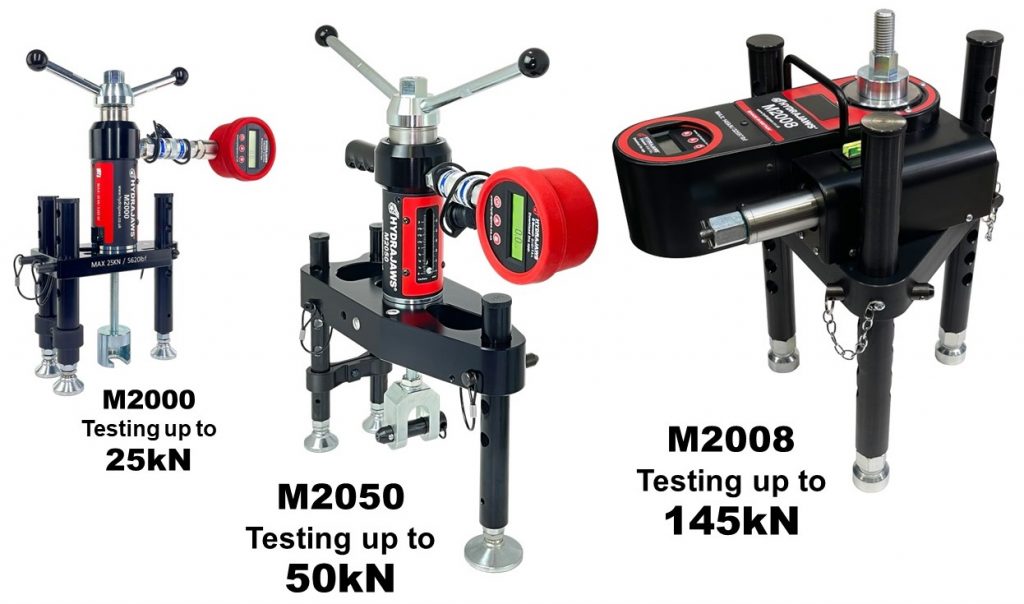
Most pull testing engineers will have a Hydrajaws M2000 which will cope with anything up to 25kN. The M2008 is a heavy-duty tester that will test up to 145kN. And in-between is the M2050 which will pull up to 50kN whilst still remaining light and portable.
Adaptors
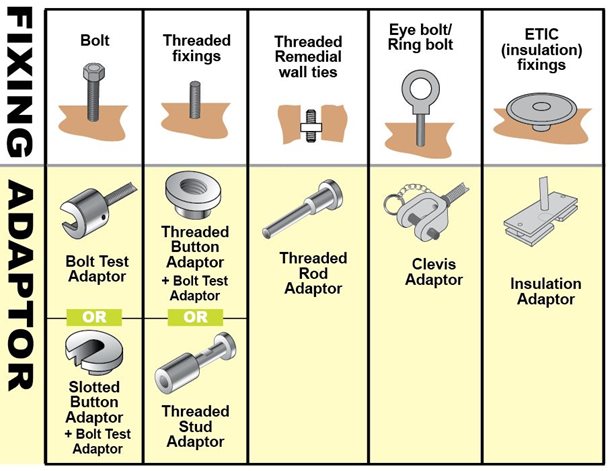
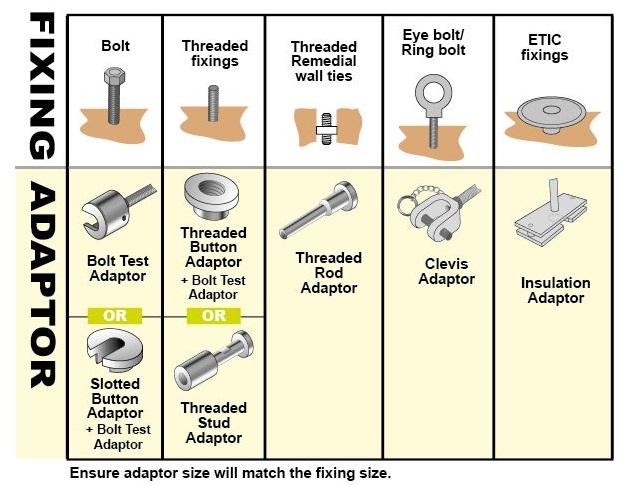
Hydrajaws adaptors are available for all testers. You choose the adaptor to fit the fixing you are testing. This chart shows some of the main fixings and the adaptor to use for each:
Set them up as follows:
The M12 locking adaptor
The M12 Locking Adaptor fits into the tester and allows various adaptors to fit into the tester (e.g., the bolt adaptor).
The bolt test adaptor
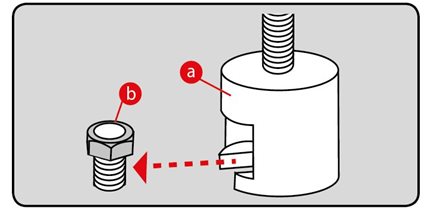
For M16 nuts, the bolt tester adaptor (a) directly engages the nut (b) in the pulling jaw.
The slotted button adaptor
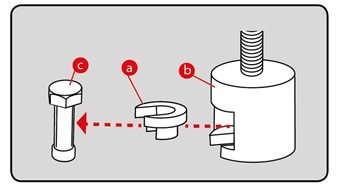
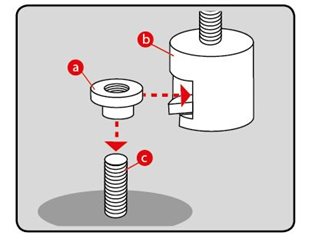
For testing fixings where a connection is made underneath the head of the fixing or anchor the slotted button adaptor is used. The slotted button adaptor (a) slots into the bolt tester adaptor (b) and engages the fixing (c). Please note when using the M2050 heavy-duty slotted button adaptors must be used.
The threaded button adaptor
For testing threaded fixings the threaded button adaptor is used. The threaded button adaptor (a) threads onto the fixing (c) and then slots into the bolt tester adaptor (b). Please note when using the M2050 heavy-duty threaded button adaptors must be used.
The clevis adaptor
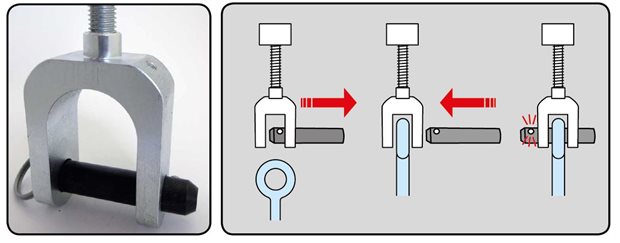
Use the Clevis adaptor for testing ringbolts. Remove the cross-pin from the clevis adaptor and offer the tester and bridge to engage the eye of the anchor in the clevis. Push the clevis pin through the clevis and eyebolt, ensuring that the ball on the pin clicks into place, having passed through the second fork.
Threaded stud adaptors
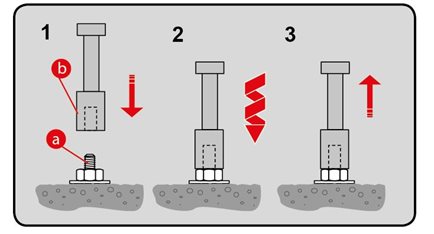
Threaded stud adaptors are suitable for testing sleeve and stud anchors. Screw a suitable threaded rod (a) into the anchor, then fit the adaptor (b).
Threaded rod adaptors
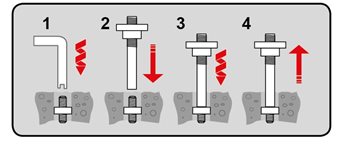
The M5 and M6 threaded rod adaptors are equipped with an external M12 thread for use in conjunction with the M12 threaded button adaptor. The M8 and M10 threaded rod adaptors have an M16 external thread. The M16 nut connects to the pulling slot in the tester or bolt tester adaptor.
Connect the threaded rod adaptor complete with the M12 button adaptor to the thread on the fixing (fig 11).
Hydrajaws Technical Advice
If a fixing location seems too unworkable then contact Hydrajaws and their technical team who will be able to suggest an appropriate adaptor or even an alternative bridge or bespoke setup.
December 2021 will start a new era for Hydrajaws as the global headquarters relocates to a brand new purpose built premises at 73 Kettlebrook Road, Tamworth B77 1AG UK.
High demand for our product range has driven continuous growth in the business, now requiring additional capacity, which cannot be contained in our current premises. Twenty-five staff will occupy the new HQ in Tamworth, five of those needing recruitment, substantial growth from the original three employees in the 1980s.
The new HQ building covers 20,000 sq. ft. and houses our manufacturing, distribution, sales and marketing, training and service operations. Exports have grown significantly across the decades, with us now supplying all continents across the globe with distributors in the US, Australia and Continental Europe. A network of global service centres and field support teams also offer comprehensive customer support.
Designed to incorporate high standards of efficiency the latest construction materials have been used including solar panels, water conservation measures and digital computer systems. Anticipating growth in electric car usage, charging points for staff and visitors have also been included in the specification.
Since Hydrajaws started the manufacture of the original tester, back in 1986 located at a 500 sq. ft. premises in Birmingham, expansion has seen four other separate premises over the ensuing 35 years.
Adrian Morgan, Managing Director (and son of CEO Royston Morgan) said: ‘In today’s world of high safety awareness, Hydrajaws is proud to have led the way in testing equipment and techniques that have potential to save lives across the world. The high quality and robust nature of our products has seen demand outgrow our supply capacity, hence our investment in a new HQ operation, helping to ensure continuity of supply and services to our customers. The all-new building not only future proofs demand but also enables a more efficient and cost-effective flow for our manufacturing and distribution process plus the establishment of more comprehensive training, research and development, service and testing facilities to serve our global customer base’.
Hydrajaws is pleased to announce that the number of subscribers to our Bluetooth Digital System has reached over 200 – more than double in the last ten months.
Since its launch in April 2020, the powerful pull-test results management system has gone from strength to strength reaching 35+ countries from all corners of the globe.
Here’s what people are saying:
“I would recommend the Hydrajaws Bluetooth Digital System because it is a game changer and a big time saver for doing the reports” – M Walker, Allfasteners USA
“The main challenge with our previous method of recording test results was that we had to hand calculate every test we’d done, now with the digital gauge and the Hydrajaws Bluetooth Digital System it does it all for us.”-
O Frost, Construction Fixing Systems UK
“What convinced me to try the Hydrajaws Bluetooth Digital System was the traceability. Being a company that installs anchors etc. it is critical to have results and reports that are un-questionable.” A Butcher, Correct Safety Australia
“Yes, I would recommend the system. If you have field staff performing the work, it is beneficial to set up all the required testing before they get to the site.” J Hughes, Hughes Engineering, LLC USA
“I was convinced to try the system because the resulting form matches the Australian VicRoads Standard. It is also a time saver and a large amount of data can be recorded with no risk of losing it.” Sujan KC, John Holland (Metro Tunnel) Australia
“The main benefits of Hydrajaws Bluetooth Digital System are the hub and the detailed reports. I would definitely recommend it!” N Wilson, Gable Fall Safe Ltd UK
Here’s how it works:
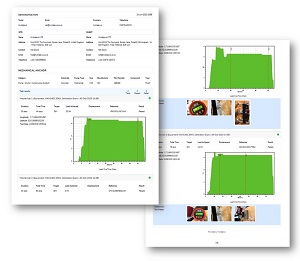
The Bluetooth Digital System and App digitally record your pull-test results in real-time by generating a report with result graphs, photos, and notes. The result graphs not only show that the test load was achieved but also that it withstood the test load for a specified length of time. This vital information is useful to prove compliance with the testing elements of BS 8539:2012 and BS 7883:2019.
Proof of Results
The digital reports are stored safely in the cloud on a server system that encrypts the data and timestamps it ensuring that it can’t be tampered with, reassuring clients and managers about the integrity of their data. The data is also available for the lifetime of the fixing.
Project Management
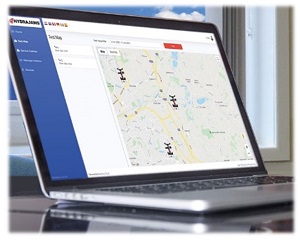
From the dashboard, project managers have a full view of their team and their equipment, and can manage job creation, reports, client communication, user access, and equipment servicing and repairs.
We are offering a 30-day FREE trial then the option to pay £30 (monthly rolling plan, cancel and re-join anytime) or £299 annually (best value). Simply sign up via the dashboard on your browser using dashboard.hydrajaws.co.uk
At Hydrajaws, we sell several models of tester and a variety of kits with different accessories – so how do you know which kit is right for you?
Follow these simple steps and you will find the right kit with the right accessories for all your current and future jobs.
Step 1 – What are you testing?
Firstly, decide the sort of things you will be testing. Is it a safety lifeline cable, Scaffold tie anchors, wall ties, bolts, studs or a different type of fixing? List all of the types of fixings you will likely be testing in the future.
Secondly, decide what loads you will be testing up to. All our pull tester models have been designed and built for specific load ranges. Try to match your target loads as close as possible to the model load range and don’t be tempted to go higher for the sake of it (e.g. although an M2008 will test as low as 10kN it is not as accurate as an M2000 will be at that range).
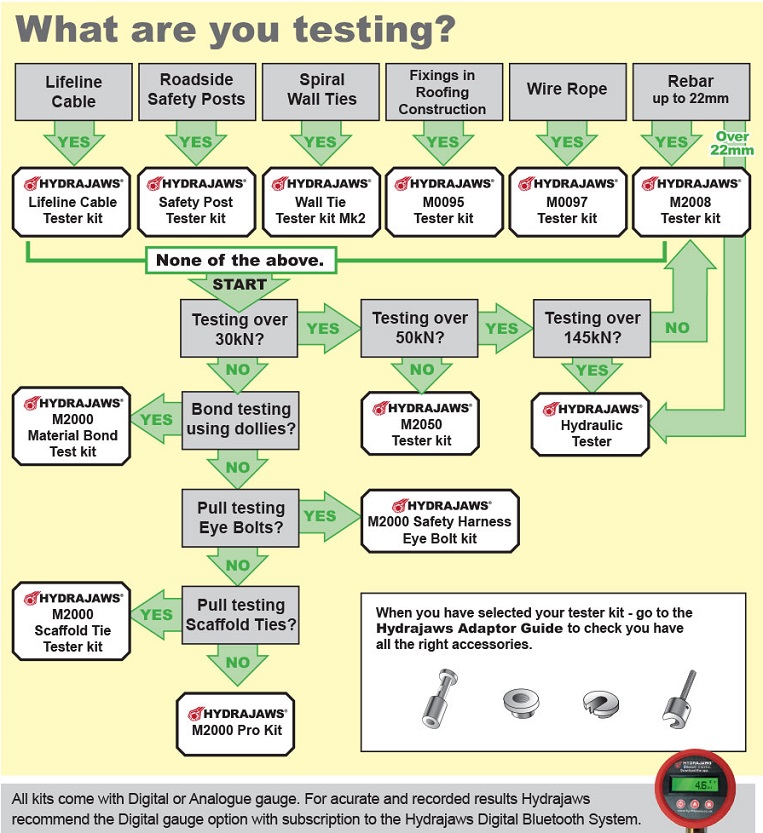
Step 2 – Product Selector Flowchart
With the information in step 1, follow our Product flowchart below. By answering the questions, you should be able to conclude the most suitable Hydrajaws kit. NB If in doubt, please contact us for further advice.
Step 3 – Check the accessories.
With a list of the contents of the kit selected in step 2, check you have the necessary accessories for all the fixings you will be testing by checking our accessories chart below:
NB If your test fixing is not shown, please contact us for advice.
If an accessory is missing, you can purchase it separately from us (see our accessories). If many accessories aren’t included then it may be a better option to purchase an M2000 Pro Tester Kit that has a comprehensive range of extras to cover most testing jobs. If in doubt, please contact us for advice.
Step 4 – Consider optional extras.
At this stage, it may be worth considering these optional extras to make life easier and jobs quicker.
Extension Bridges
If the standard bridge of your chosen tester is not big enough to sit over a fixing then consider our larger extension bridges. The footprints of all our bridges (standard and extension) are available on our Bridges page if you think space is an issue.
Hydrajaws Bluetooth Digital Reporting System Subscription
Most of our customers are now moving on from the standard analogue gauge and offering the most accurate and ‘cutting edge’ service to their customers by using a hi-tech Hydrajaws Digital gauge.
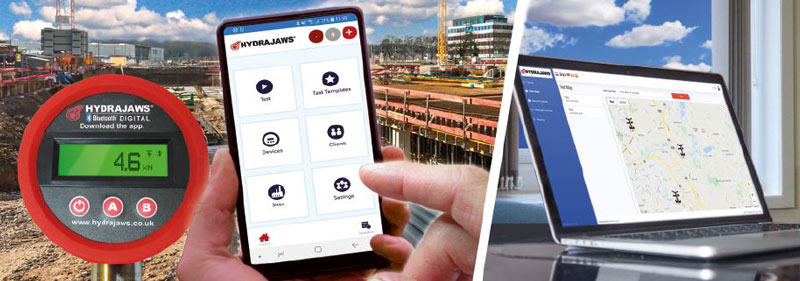
The Hydrajaws Digital Gauge is Bluetooth enabled allowing pull test results to be sent to Hydrajaws Bluetooth Digital Reporting System via a mobile device which is then stored securely in the cloud, for data storage and/or analysis. This system makes pull testing easier and more accountable by proving on-site results. The digitally generated reports, which can include photos and notes, can be sent directly to clients or managers and accessed remotely anywhere on a browser via a user’s company dashboard.
This system has the added advantage of flagging up when your gauge is due for calibration to help keep your important calibration up to date.
If you are still unsure about which Hydrajaws product is right for you, please don’t hesitate to contact us, and one of our technicians will be happy to discuss your job and its requirements.
Since its launch in April 2020, the Hydrajaws Bluetooth Digital System has been taking the pull testers world by storm. The powerful pull test management system has gone global with pull tester operatives around the world able to prove their pull testing results.
Worldwide Usage
The digital pull testing results platform has been used in Europe, Asia, North America, South America, Africa, and Australasia to track and verify that anchors and fixings have been tested to the correct standards.
Real-time data has been collected on façades in Finland, France, and the Far East which confirm that the fixings are safe. Many scaffolding companies in the UK have used the system to prove that their scaffold ties are secure enough to only come down when needed. Over in Switzerland, Spain, and Singapore cladding has had its fastening security demonstrated by the digital reporting system. Abseiling anchor points in Australia have legally verifiable proof confirmation that all the correct checks have been carried out in accordance with Health & Safety Law. And engineered lifeline systems for personal fall protection in Peru, Portugal, Argentina, and UAE, to name but a few, have all been able to certify that their systems have been tested and their data is stored safely in the cloud.
All around the world – pull testers in all areas of the industry are feeling the benefits of subscribing to this comprehensive and beneficial system.
Total Proof and Assurance
Adrian Morgan, Hydrajaws Ltd Managing Director, said “It’s encouraging to see that the new Bluetooth Digital System is being used all over the world. When we developed the system and app we could see its potential for international reach.”
He added “We believe the reason the system is proving so popular globally is that stringent Health & Safety rules are constantly increasing.
When life-threatening incidents occur, the consequences and repercussions can be very high. The Hydrajaws Bluetooth Digital System can prove undeniably that tests have been performed – and performed correctly.
Using the Hydrajaws Bluetooth Digital System mitigates the risk to Pull-Testers by providing them with a fully auditable and transparent data provenance trail that is admissible in a court of law.”
Request a Demo
Anyone wishing to see how the powerful pull test management system works or thinking of signing up can request a demonstration with our resident expert Simon Harris. Simon can be contacted at si***@**********co.uk
For more information including the Digital Gauge Manual and links to handy tutorials visit our Bluetooth Digital System page on our website.
Analogue gauges may have a long history of providing quick, reliable readings, but, as Hydrajaws Sales Manager, Neil Stone points out, “the popularity of digital gauges being used for recording pull test results is increasing”.
We compared both to find out why:
Analogue vs Digital Gauges: Pros and Cons
While analogue and digital gauges both fulfil the same functions, they use quite different technologies. There are several distinctive characteristics that make digital gauges stand out against the standard analogue mechanical gauge whose technology dates back to the mid-19th century.
Analogue Gauges
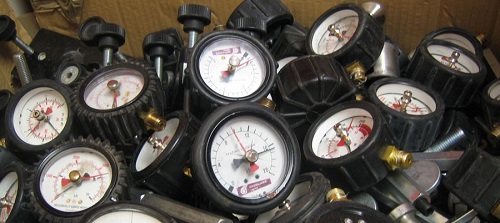
Sometimes referred to as dial gauges, analogue gauges have a needle that directly responds to changes by pointing to numbers on a scale corresponding to the force sensed by the measuring element. The movement of the needle translates to force applied, which is easily recorded on a pull tester via the maximum load indicator (sometimes referred to as the drag needle).
Pros: Analogue gauges are cheaper and easy to use, and because they are made of mechanical parts, they don’t require a power source.
Cons: Analogue gauges are purely mechanical – they are made of small gears and moving parts. Neil says, “they’re much more susceptible to damage from typical on-site conditions which can lead to inaccurate readings. They are also sensitive to extreme temperatures, corrosion, and vibration, which can cause damage beyond repair.”
Digital Gauges
Digital gauges use transducers to display force readings on a digital indicator. They provide accurate results with clear readability. Digital gauges perform reliably and provide consistent readings and are powered by a battery.
Pros: There are several key characteristics that give digital gauges an edge over their analogue counterparts.
Durability – Digital gauges can perform without failure in extreme temperatures and our issue 3 digital gauge is no exception with a very impressive ambient temperature operating range of -20° to 35°C. Designed to withstand abuse and cracking, they are made from aluminium with thick, crack-resistant plastic faces to protect them from shocks, drops, and flying debris. As a result, they are far more durable and resistant to accidental damage than analogue gauges. Our issue 3 digital gauge has achieved an Ingress Protection Code of IP54 meaning it can withstand dust ingress sufficient to prevent it from operating normally and it is fully protected against solid objects and splashing of water from any angle.
Calibration – A calibrated digital gauge stays calibrated much more reliably than an analogue gauge. Digital calibration is done using software, so it is much more precise.
Customisation Options – Digital gauges can be customised to suit your application – display units can be set on request in kN, lbf, Kips, psi, or bar. This is impossible with analogue gauges – a completely new gauge would need to be purchased.
Digitised Data Collection – A huge advantage of digital is data collection. Hydrajaws Digital gauges have built-in Bluetooth connectivity allowing results to be sent to the Hydrajaws Bluetooth Digital System via a mobile device which is then stored securely in the cloud, for data storage and/or analysis. The reports, which can include photos and notes, can be sent directly to clients or managers and accessed remotely anywhere on a browser via a user’s company dashboard. Calibration reminders are also displayed via this system helping keep your gauge calibration up to date.
Readability – Digital gauges feature a clear readout on a large, easy-to-read display. Our digital gauge includes a ‘backlight’ facility for improved viewing in low light applications. Taking readings from an analogue gauge always requires interpretation of the location of the needle. In some applications, analogue is preferred because of the quick, at-a-glance nature of seeing the needle on the dial. But analogue gauges can be misread due to parallax error, where the dial appears to be in different positions based on the angle of the person interpreting the data.
Accuracy – Our issue 3 digital gauge has an improved accuracy class of +/- 1.5% full-scale deflection whereas the analogue gauge has an accuracy class of +/- 2%.
Cons:
Power source – A digital gauge will always require a power source, so if your usage is infrequent then you’ll need to remove the battery to stop it from being drained. Batteries don’t last forever but thankfully a spare battery is supplied with our digital gauges as standard.
Price – No comparison analysis between analogue and digital gauges would be complete without considering the cost. Because digital gauges use microprocessors and sophisticated equipment, they are more expensive upfront. However, analogue gauges often fail – they’re not as reliable, and they need to be replaced much more often so what you save in price initially might end up costing you more in the long run.
Which Gauge is best for you?
Neil advises: “In the end, your choice of gauge will be influenced by your or your client’s specific needs. There will probably be users unlikely to convert from an analogue gauge, but if you want accurate pull test results to confirm the safety of your job, there is a good chance your pull tester gauge is ready for a digital upgrade.”
Our technical experts are on hand to help so please call us at 01675 430 370 or fill out our contact us form.
Hydrajaws Digital Gauge
The Hydrajaws standard digital gauge provides many advantages over the standard analogue gauge including more accurate and clear results. Standard 25kN, 30kN, and 145kN are available (other sizes are available on request). Rise and fall mode and peak hold function are available. The Digital gauge has an improved accuracy class of +/- 1.5% full-scale deflection (Analogue gauge accuracy class of +/- 2%). The ambient temperature operating range is -20 degrees C to +35 degrees C. New improved Gauge issue 3 features include a ‘backlight’ facility for improved viewing in low light applications, screen orientation flips allowing easy reading from any angles (set by Hydrajaws upon request), tougher outer gauge protective cover supplied as a standard and improved interface allowing easier setup and operation of facilities such as ‘peak hold’.
Proof testing using Hydrajaws equipment is easy, straightforward and accurate when done correctly. In this article we have identified 4 common mistakes that you may be making that can affect test results and the methods to avoid them.
Incorrect use of the analogue gauge.
There are two main errors associated with using an analogue gauge.
The first is the incorrect use of the maximum load indicator (sometimes referred to as the drag needle). This should always be set to zero before any winding of the pull tester takes place. This will allow the maximum load achieved level to be indicated should the fixing fail before the desired load level is achieved.
The second is parallax error, where the reading is inaccurate due to the readers’ eye being positioned at an angle to the measurement markings. This error should not be overlooked, as the difference in readings could be the difference between a pass and a fail. It is worth noting that both of these errors don’t occur when using a digital gauge and the Bluetooth Digital System accurately records and produces a graph to show the maximum load achieved.
Incorrect positioning of the load bridge on brick or blockwork.
When the fixing to be tested is located in brick or blockwork then the load bridge feet of the pull tester should not be positioned on the same brick or block as the fixing being tested. Instead the load bridge feet should be positioned on the surrounding bricks that don’t have the fixing to be tested in them. It is worth noting that the original 150 Bridge was designed to give enough expanse across a UK house brick. When testing on blockwork, then a 270 or 600 load spreading bridge should be used.
Not understanding when ‘proof testing’ and ‘test to failure’ are appropriate.
The vast majority of pull testing is proof testing. This involves loading an anchor up to an appropriate level for an appropriate amount of time. This is designed to give all stakeholders greater confidence that the anchor chosen will hold the load required in the particular substrate. It is important that a suitable holding time is used. This is normally between 30 seconds and 3 minutes, depending on the application.
‘Test to failure’ is pulling an anchor until there is either a failure or the load limit of the pull test machine reaches its maximum rated load. As the name suggests, testing to failure is likely to cause damage to the substrate, which on many occasions will need repairing, which can be costly, both in time and money. ‘Test to failure’ should only be considered when there is no manufacturer data on the anchor being tested and the substrate in which the anchor is being used. The Construction Fixings Association has several guidance notes to discuss this in more detail.
Not testing to the appropriate load for the anchor and/or substrate and/or application.
The importance of researching the anchor/substrate and application before any pull testing takes place cannot be stressed enough. Prior specification information ensures that the relevant pull test regimes are chosen. The Hydrajaws Bluetooth Digital System ensures this information is recorded before the first pull test. It is important to note that when proof testing to a known safety factor over the calculated application load, the design resistance of the anchor must not be exceeded. The Construction Fixings Association has several guidance notes to discuss this in more detail.
Ensure you are not making these mistakes during a job and your results will be accurate and safe.
For more information the testing requirement of anchors is detailed in two British Standards:
BS 8539:2012 Code of practice for the selection and installation of post-installed anchors in concrete and masonry. BSI (see BSI website)
BS 7883:2019 Personal fall protection equipment. Anchor systems. System design, installation, and inspection. Code of practice. (see BSI website)
Hydrajaws offers training on both the safe use of a Hydrajaws Tester and delegates working towards relevant standard BS 7883:2019 and issuing certificates of competence that are recognised by local authorities and others in the industry. Further details can be found on the training page of our website Hydrajaws Training
The Construction Fixings Association runs training courses for General Purpose anchor testing to the recommendations of the CFA Guidance Note: Procedures for site testing construction fixings – 2012 and therefore to the recommendations of BS 8539:2012. For more information visit CFA Training
Hydrajaws has invested in an in-house FDM 3D printer. The state-of-the-art printer will allow us to take advantage of new technology and have greater control of our manufacturing processes. Some of the end-use components; that would have previously been produced using more traditional and slower manufacturing methods; will now be produced in-house.
Not only will the 3D printer be used for producing end-use components but also for R&D, prototyping, and production jigs and fixtures due to the very high strength characteristics of the material combined with excellent hardness and surface finish. We are currently leveraging the capabilities of the new 3D printer for the production of end-use leg braces for the M2050 Pro Tester.
Craig Couldrey, Hydrajaws Engineering Manager, commented: “This investment will provide greater control and flexibility in multiple technical areas of the business. Hydrajaws testers are built to last and the robustness of the new material has been proven, which gives us the confidence to invest in resource-efficient technology. The new 3D printer will allow us to produce components in-house to meet the demand of British Made products”.
All Hydrajaws portable pull testers are manufactured to the highest standards and are British made, which makes us proud to be members of Made in Britain. View our Made in Britain profile page.
This new system allows on-site pull tests to be automatically recorded and compiled into a digital report using the Hydrajaws Bluetooth Digital App on a mobile phone or tablet device. These reports can be sent directly to clients or managers and are stored in the cloud to be accessed remotely anywhere on a browser in a users own company dashboard.
The cost is £30 per month or £299 for a 12-month subscription and a free trial is available when signing up.
A licence must be assigned before the app can be used. Please see the Hydrajaws Bluetooth Manual for full instructions on signing up and assigning licences.
System requirements:
Android: Android version 7 OS onwards.
Apple Devices: Operating system of iOS 11 onwards.
The BS 7883:2019 standard is aimed at system designers, installers, inspectors and users of anchor devices and anchor systems as well as architects, structural engineers and examining bodies covering the installation, testing, commissioning and examining in service of anchor devices according to BS EN 795.
A high bar is set, by the standard, to ensure that installers and inspectors carry out their work in a suitable manner to increase safety for users and the installation quality of the anchor system.
Hydrajaws run a range of specialised training courses:
Full day covering theory and practicals on type ‘A’ Anchor Devices (Safety Harness Eyebolts) for Fall Protection to BS EN795, BS 8610 and BS 7883: 2005.
Half day covering the upgrades aimed at EN795 Installers and re-testers. Theory and practicals are included.
Other courses available include:
Competent Installer Training on Seasonal Decorations.
Competent Installer Training on EN795 Steelwork Anchors.
As Hydrajaws is a key manufacturer and supplier of Test Equipment required, full training and guidance is offered during all its courses. Introduction to the very latest innovations in gauges and reporting capabilities to both users and management is given with demonstrations.
Hydrajaws offers in-house training on all its product range.
To find out more about our training courses, pricing and available dates or for more information send your enquiry using our Contact Us form or call +44 (0)1675 430 370.
The BS 7883:2019 code of practice is available to purchase on the BSI website by clicking here.
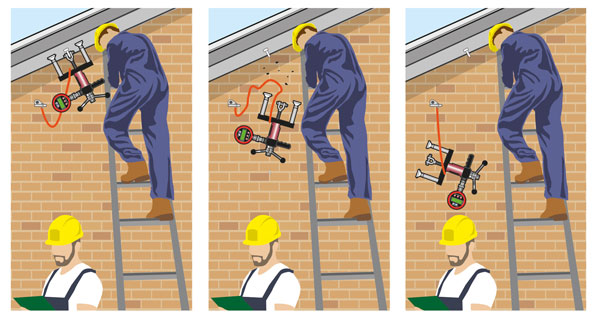
The Hydrajaws Safety Kit provides a comprehensive kit to attach a tester body to a suitable fixing point whilst testing.
This is essential when testing on ceilings and/or vertically and will stop the tester falling and prevent injury to personnel and/or damage to the tester unit.
The bungee tether attaches the tester to a solid surface with an easy and quick self-locking carabiner. A fixed anchorage plate is provided to use if an anchor point is not available.
And it all packs away in a tidy and convenient water proof UV resistant PVC bag.
As we all know, not all testing jobs are on a flat surface. There are many occasions when a pipe, wall or other vertical surface is making it difficult to get to the fixing and preform a pull-out test.
However, Hydrajaws have a few accessories and techniques that can be used to make life easier.
1. Integrated Nut
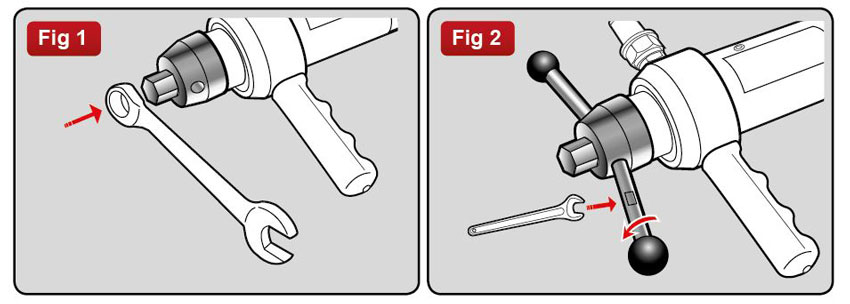
In confined spaces the integrated nut can be used with a 22mm ratchet spanner for better access and for easier operation (fig 1).
Remove the handles by unscrewing from the base using the 10mm wrench (fig 2).
2. Adjusting the handle position
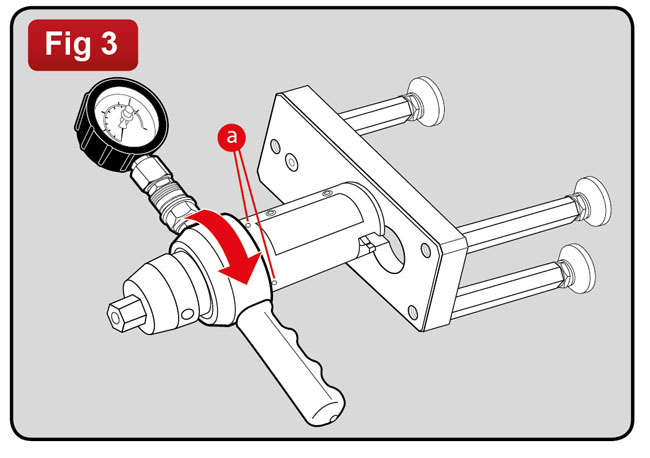
The top part of the unit can be rotated if the handle or gauge becoming obstructed by the unit legs or other objects (fig 3).
This is achieved by loosening the three grub screws (a) on the body using the allen key provided. Rotate the top until the handle and gauge are clear of obstacles and re-tighten the screws.
3. Change the bridge
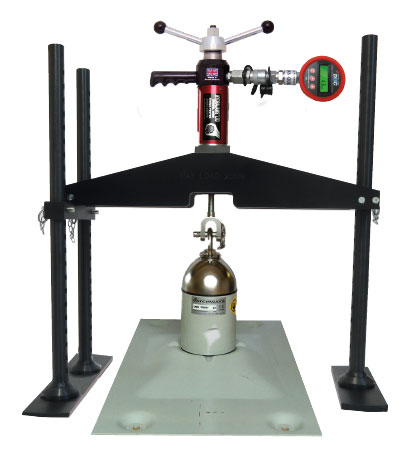
For a bigger span – Hydrajaws make a 270, 600 and Pyramid bridge. These can offer greater stability and a wider area for testing.
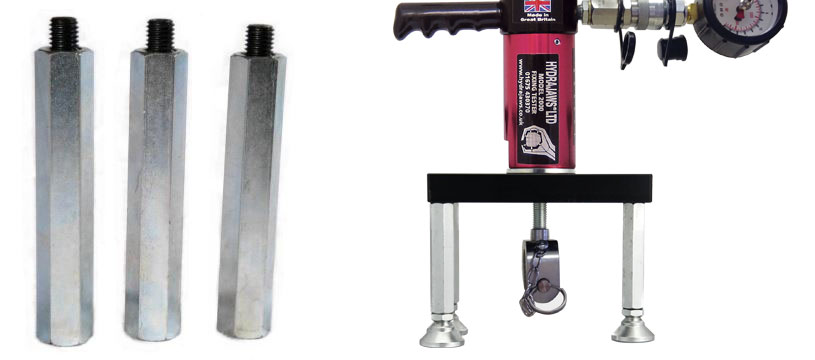
4. Hex extension legs
Available for the 150 Bridge in 50mm, 75mm and 100mm. The hex extension legs extend the reach of the Model 2000.
5. Adaptors
Many of the adaptors can be used either on their own or combined with another adaptor to give longer reach.
If a test site seems unaccessable then send us a photo and give us a call on 01675 430 370. We can usually find a solution to most problems.
We use cookies on our website to give you the most relevant experience by remembering your preferences and repeat visits. By clicking “Accept All”, you consent to the use of ALL the cookies. However, you may visit "Cookie Settings" to provide a controlled consent.
This website uses cookies to improve your experience while you navigate through the website. Out of these, the cookies that are categorized as necessary are stored on your browser as they are essential for the working of basic functionalities of the website. We also use third-party cookies that help us analyze and understand how you use this website. These cookies will be stored in your browser only with your consent. You also have the option to opt-out of these cookies. But opting out of some of these cookies may affect your browsing experience.
Necessary cookies are absolutely essential for the website to function properly. These cookies ensure basic functionalities and security features of the website, anonymously.
Cookie
Duration
Description
cookielawinfo-checkbox-analytics
11 months
This cookie is set by GDPR Cookie Consent plugin. The cookie is used to store the user consent for the cookies in the category "Analytics".
cookielawinfo-checkbox-functional
11 months
The cookie is set by GDPR cookie consent to record the user consent for the cookies in the category "Functional".
cookielawinfo-checkbox-necessary
11 months
This cookie is set by GDPR Cookie Consent plugin. The cookies is used to store the user consent for the cookies in the category "Necessary".
cookielawinfo-checkbox-others
11 months
This cookie is set by GDPR Cookie Consent plugin. The cookie is used to store the user consent for the cookies in the category "Other.
cookielawinfo-checkbox-performance
11 months
This cookie is set by GDPR Cookie Consent plugin. The cookie is used to store the user consent for the cookies in the category "Performance".
viewed_cookie_policy
11 months
The cookie is set by the GDPR Cookie Consent plugin and is used to store whether or not user has consented to the use of cookies. It does not store any personal data.
Functional cookies help to perform certain functionalities like sharing the content of the website on social media platforms, collect feedbacks, and other third-party features.
Performance cookies are used to understand and analyze the key performance indexes of the website which helps in delivering a better user experience for the visitors.
Analytical cookies are used to understand how visitors interact with the website. These cookies help provide information on metrics the number of visitors, bounce rate, traffic source, etc.
Advertisement cookies are used to provide visitors with relevant ads and marketing campaigns. These cookies track visitors across websites and collect information to provide customized ads.